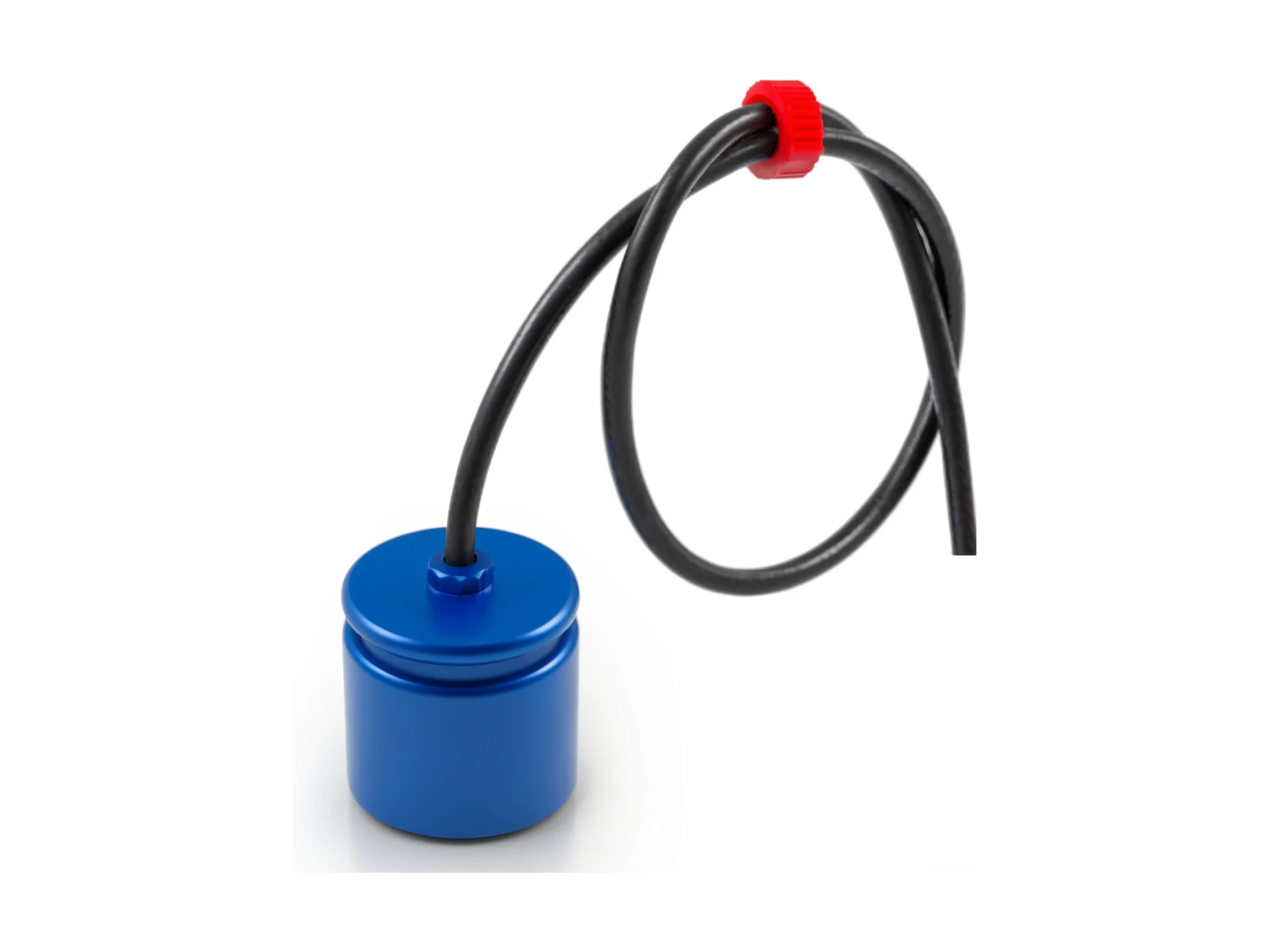
Vexa Mini: Built for Integration
The world's smallest underwater acoustic modem
Vexa Mini is a complete two-way link for collecting data from subsea sensors, and it fits where full-size hardware can't — a micro-AUV, an instrument housing or a diver's kit. At Ø41×45 mm and 160 g, it reaches a reliable 1000 m.
What it does
- Transparent and packet modes — the modem passes a serial stream straight through, or sends packets with guaranteed delivery
- Multi-unit networking — it addresses up to 254 units and broadcasts to all of them at once
- Remote telemetry — the modem reads the depth, temperature and supply voltage of another Vexa unit, and measures the distance to it from the signal's travel time
- Instrument control — it issues preset commands to a subsea device
Distinctive features
- Ø41×45 mm, 160 g — smaller than any acoustic modem on the market
- Patented monoblock design — one sealed body, no separate pressure housing
- 20 code channels — no interference between neighbouring networks
- Depth rating 300 m — sufficient for most inspection and survey work
- Low power draw — 0.33 W receiving, 6 W transmitting
- Open, documented protocol — NMEA-style, with .NET and Arduino libraries
Going acoustic has always meant finding room for a full-size modem — room a small platform rarely has. Vexa Mini began with a simple question: what's the smallest modem that still works reliably? The answer is a sealed body of Ø41×45 mm and 160 grams — a full acoustic modem small enough to add to a micro-AUV, an instrument housing or a diver's kit without redesigning the platform. Its CDMA protocol keeps units from interfering as they share the water, so a single network can gather readings from up to 254 addressed sensors. Connect it to a serial port and it passes data straight through; switch to packet mode and every message is confirmed. The smallest modem. A full link. A whole network.
System components
Key numbers
Request a quote
Tell us about your project and we'll help you specify the right configuration of the Vexa Mini.